Views: 0 Author: Site Editor Publish Time: 2026-03-30 Origin: Site

When designing or upgrading furniture, the choice of drawer slides plays a vital role in the overall functionality and durability of the drawers. Telescopic soft close drawer slides have become the preferred choice due to their smooth, quiet operation and long-lasting performance. However, one of the key factors in choosing the right drawer slide is understanding the load capacity, which ensures that the slides perform optimally without breaking or causing damage over time. In this article, we will explore what load capacity means for telescopic soft close drawer slides and how to select the right capacity for your application.
Load capacity refers to the maximum weight a drawer slide can handle without compromising its performance or durability. This measurement indicates how much weight the slide can support while allowing the drawer to operate smoothly and silently. Drawer slides are typically rated for different weight classes, ranging from light-duty to heavy-duty, depending on the materials used and the design of the slide mechanism.
For telescopic soft close drawer slides, the load capacity is critical because the soft-close mechanism relies on the slide's ability to handle the weight of the drawer while preventing it from slamming shut. An appropriate load capacity ensures that the soft-close mechanism works properly, and the slide continues to perform smoothly without bending or failing.
The most important factor in selecting the appropriate load capacity is the size and weight of the drawer. Larger drawers naturally weigh more, and thus, require a higher load capacity. A small, shallow drawer holding lightweight items such as utensils or stationery will need a different slide than a deep drawer designed to carry heavy kitchen tools, books, or office supplies.
Drawer slides designed for heavy-duty applications need to be robust enough to handle frequent opening and closing, as well as the weight of the items stored. For example, kitchen drawers that are constantly accessed may require higher load capacity slides than office or bedroom drawers, which may not be used as often. The more frequently a drawer is opened and closed, the more stress it places on the slides, which means a higher load capacity is necessary for optimal longevity.
The material and design of the telescopic soft close drawer slides play a crucial role in determining their load-bearing capabilities. Steel, especially cold-rolled steel, is commonly used for its strength and durability. Some slides are designed with reinforced mechanisms or additional ball bearings to handle heavier loads. Slides made of galvanized steel or with chrome plating offer additional corrosion resistance, which can be important in high-humidity environments like kitchens and bathrooms.
When selecting the appropriate load capacity for your telescopic soft close drawer slides, it’s essential to match the slide’s capabilities with the drawer’s expected use. Below, we outline some common load capacities and their ideal applications:
Load Capacity | Drawer Size and Weight | Ideal Applications | Example Uses |
Light Duty (50-70 lbs) | Small, shallow drawers for lightweight items | Residential furniture, bathroom drawers, small office drawers | Kitchen utensil drawers, small office supplies |
Medium Duty (100-150 lbs) | Medium-sized drawers, moderately heavy items | Residential and commercial furniture, larger office drawers | Kitchen drawers for tools, large office files |
Heavy Duty (200+ lbs) | Large, deep drawers with heavy or bulky items | Industrial and commercial use, large kitchen drawers | Pull-out pantry drawers, tool storage, file cabinets |
Light-duty slides are suitable for smaller drawers that hold lighter items, such as utensils, stationery, or cosmetics. These slides are typically found in bedroom furniture, bathroom vanities, or small kitchen drawers. They offer smooth operation and are generally sufficient for drawers with moderate weight.
Medium-duty slides are ideal for larger drawers that carry heavier items, such as pots, pans, or office supplies. These are commonly used in kitchen cabinets, office desks, and bedroom furniture that need more support. Medium-duty slides can also be used for commercial applications where more robust slides are required but don’t necessitate heavy-duty capacity.
Heavy-duty telescopic slides are designed for industrial or commercial applications where heavy drawers are required, such as pull-out pantry drawers, tool storage in workshops, or file cabinets that hold substantial weight. These slides are typically reinforced with high-strength materials and feature advanced mechanisms to ensure smooth and silent operation even with substantial weight.
Choosing a load capacity that’s too low or too high for your application can result in a variety of problems:
Premature wear: Using slides that can’t support the weight of the drawer will lead to premature wear, especially on the soft-close mechanism. This can cause the drawer to become difficult to close, and the mechanism may fail entirely.
Deformation or failure: If the slide is constantly under more weight than it is rated for, it can bend, warp, or even break, rendering the drawer unusable.
Unnecessary cost: Heavy-duty slides tend to be more expensive. Using them for smaller or lighter drawers results in unnecessary additional costs without providing any real benefits.
Increased friction: Over-engineering a drawer slide can lead to increased friction, making the drawer harder to open or close, and can create more wear on the drawer itself.
Selecting the right load capacity ensures that the drawer operates as smoothly as possible while preventing damage to both the slide and the furniture.
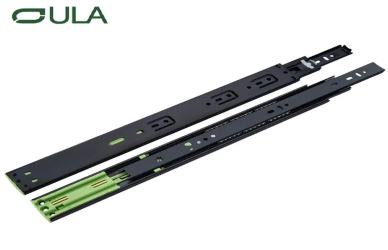
Choosing the correct load capacity for your telescopic soft close drawer slides begins with calculating the weight your drawer will carry. Here’s how to determine your requirements:
Start by measuring the height, width, and depth of the drawer. Larger drawers are likely to carry heavier items and will require a higher load capacity.
Add up the approximate weight of the items you expect to store in the drawer. Consider whether the contents will be lightweight (like utensils or office supplies) or heavy (such as cookware or tools).
Think about how often the drawer will be used. High-frequency drawers, like those in kitchens or offices, will experience more wear and tear, so it’s better to overestimate the weight they will carry to ensure long-lasting performance.
It’s always a good idea to choose a slide that can support a little more weight than you expect, ensuring there is a safety margin for unexpected weight increases.
To help you further understand the available options, here’s a table comparing the common load capacities for telescopic soft close drawer slides and their typical applications:
Load Capacity | Drawer Dimensions | Materials Best Suited | Typical Use | Recommended for |
50-70 lbs | Shallow to medium depth drawers | Steel, Zinc, Chrome-plated | Small residential cabinets, bathroom drawers | Lightweight kitchen items, small office drawers |
100-150 lbs | Standard-size drawers | Steel, Stainless Steel, Galvanized Steel | Residential kitchen cabinets, medium office drawers | Larger office files, kitchen pots, pans |
200+ lbs | Deep, full-extension drawers | High-strength Steel, Reinforced Alloy | Industrial tool storage, commercial cabinets | Heavy-duty file cabinets, large kitchen pantry |
Light-duty slides are designed for smaller, lighter drawers, typically carrying up to 70 lbs, while heavy-duty slides can handle over 200 lbs, suitable for large or industrial drawers.
While it’s possible, using heavy-duty slides in small kitchen drawers is unnecessary and may lead to higher costs without added benefit. Light to medium-duty slides are typically sufficient.
Estimate the weight of the contents (files, documents, office supplies) and consider how frequently the drawer will be used. A medium-duty slide should suffice for most office drawers.
While most slides are fixed capacity, certain heavy-duty telescopic slides can handle a wider range of weights, making them versatile for different types of furniture.
Choosing the correct load capacity for your telescopic soft close drawer slides is crucial to ensuring smooth operation, durability, and the long life of both the drawers and the slides themselves. By understanding the weight requirements of your drawers and matching the appropriate load capacity, you can prevent potential issues such as premature wear, malfunction, or safety risks. Factors such as the frequency of use, the types of materials in the slides, and the environment in which they are used should all be considered when making this decision. The right load capacity ensures that the slides operate efficiently, allowing for smooth, silent movement and prolonging the lifespan of the entire drawer system.
Whether you need light-duty slides for small kitchen drawers or heavy-duty slides for large industrial storage, selecting the correct capacity ensures that your drawers will handle the weight properly. A well-chosen slide will not only enhance the functionality of your furniture but also improve the overall user experience. With the right selection, your furniture will continue to operate smoothly and last longer, saving you time and money on repairs and replacements. Ultimately, the correct load capacity is an investment in the quality, safety, and durability of your furniture.


